Wool comforters provide natural temperature regulation, durability, and moisture management, making them a thoughtful choice for varied climates and sleeping preferences. The wool fibers create microclimates that help maintain warmth without overheating, while resisting over-absorption to reduce night-time humidity. This category highlights the intrinsic properties of wool, including breathability, loft, and resilience for long-term use.
Key characteristics of wool comforters include excellent insulation with lightweight warmth, resilience to compression, and inherent flame resistance. Wool’s crimped fiber structure traps air, offering constant comfort that adapts to sleep cycles. For allergy-conscious environments, wool fibers help resist dust mites and maintain a cleaner bed surface over time.
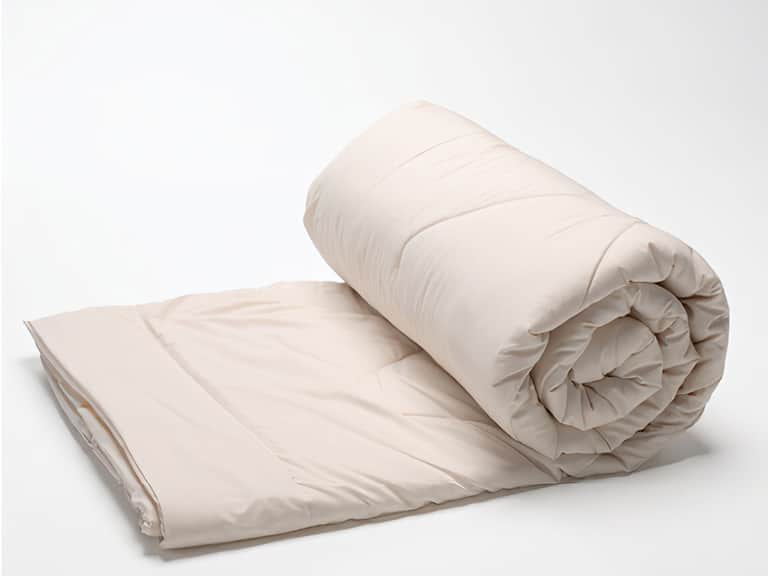
The Suite Sleep Washable Wool Comforter demonstrates how wool can combine performance with practicality. It features machine-washable care, which simplifies maintenance without compromising fiber integrity. This balance of ease of care and durable temperature regulation showcases wool’s suitability for regular household use alongside nursery or family beds.
To support varied bedding setups, wool comforters pair well with organic mattresses and complementary bedding such as pillows and breathable linens. They also suit room environments that include adjustable beds, where responsive temperature control enhances personalized comfort. The use of natural wool aligns with sustainable bedding practices and long-lasting comfort expectations.
In summary, wool comforters offer a durable, temperature-regulating option that supports restful sleep across seasons. Their natural properties foster comfort in diverse settings—from nursery spaces to adult bedrooms—while easy-care features like washable wool expand practical usability. Keywords such as bedding, pillows, organic mattresses, nursery, and adjustable beds reflect the category’s relevance.
 Bedding